
उद्भव (Udbhava): Everybody Has a Plan Until They Get Punched: One Man’s MMA Journey from Panic to Composure

A few years of MMA, two fights won, a few punches to the face—and a completely different way of dealing with pressure.
About उद्भव
उद्भव (Udbhava) is a series of conversations with students at Kombat Hall. Stories of people who chose to keep showing up and did not quit.
Through honest conversations, we explore उद्भव (Udbhava) or The emergence of one's truest self through consistent practice.
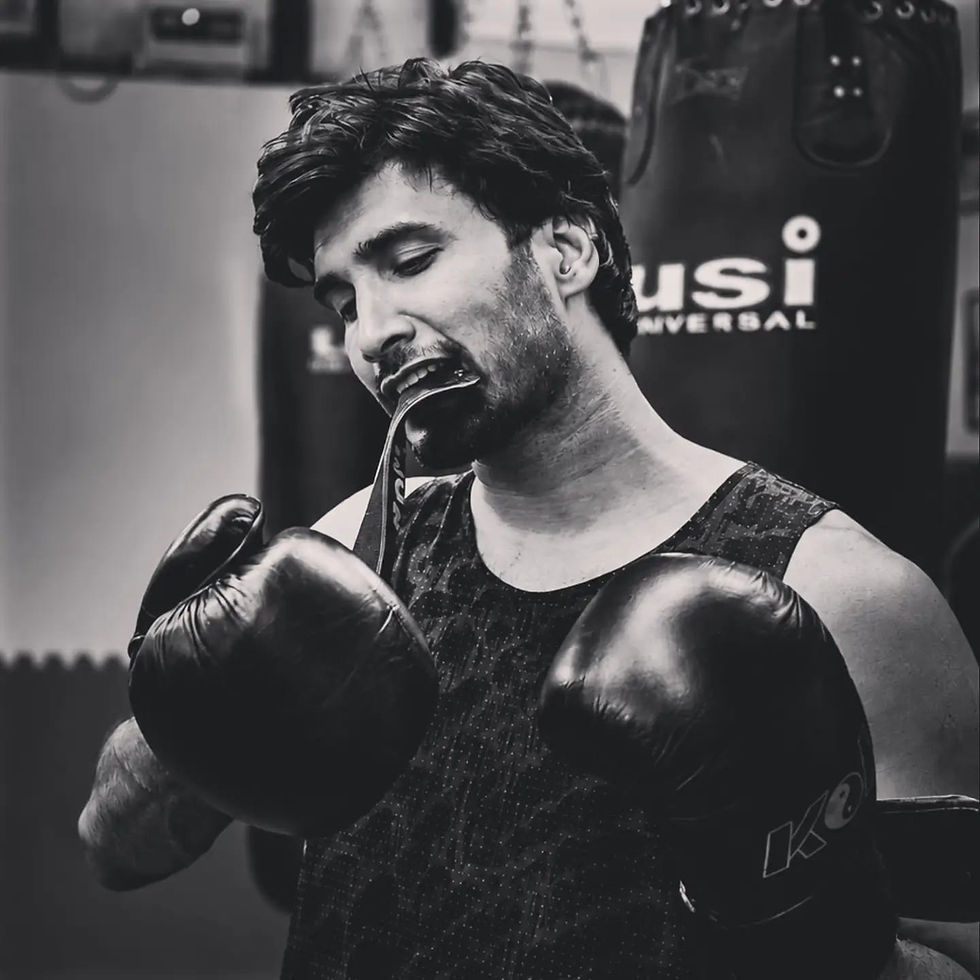
This blog covers the story of Tarun, a consistent warrior who is always respectful, gives 100% in class and never misses hitting the strength section. Here are some highs and lows from his journey.
Shikher: Hi Tarun, a quick introduction for the readers, please
Tarun: I am Tarun, and I currently work at an MNC as a Team Lead / Data Analyst. I have been practicing MMA from 2023 at Kombat Hall, and it has been a tremendous experience for me.
Shikher: How did you start your martial arts journey?
Tarun: Earlier, I used to play a lot of sports like cricket, as is typical for an Indian kid growing up. But then I realised that I was facing a lot of injuries. I thought of switching to other sports like football, but I still couldn't overcome the hesitation and lack of confidence.
I switched to MMA in search of confidence, and from then on, it has been a tremendous journey for me.
Shikher: Who was your first coach?
Tarun: My first coach was Sushant Sir, then Aman Sir, and you.
Shikher: Going back to your professional work, what does your day look like?
Tarun: I work in operations. Currently, it is a 10-hour desk job—a proper sitting job. There is a lot of stress managing clients and the team, so there's always something going on from 9 to 5.
Shikher: Is most of the office crowd fit or unfit?
Tarun: Mostly unfit. They eat whatever junk is available, and that becomes their daily routine.
Shikher: What helps you operate in a better zone than most unfit people?
Tarun: Ever since I started training, I have noticed a distinct change in myself: I can sit for long hours relatively stress-free, I manage pressure better, and I am much calmer than before.
Shikher: Give me an example from before martial arts where you panicked or felt stressed.
Tarun: I’ll give you one or two examples. One is professional: earlier, I used to get very irritated with my team whenever I had to communicate tasks. If they asked questions and discussions went back and forth, I would lose my patience.
Shikher: and shout at your team?
Tarun: Yes. I would get irritated and shout at them, but now I am calmer. Instead of reacting, I respond.
Shikher: When you are in a stressful situation, what do you do? Do you step back for a while?
Tarun: I just step away from the crowd for a moment, sit back, and take that pause I need.
Shikher: You take a moment before speaking instead of immediately shouting?
Tarun: Yes, I respond rather than react.
Shikher: Do you know that this is called an Amygdala Hijack?
Tarun: No, I haven't heard that term.
Shikher: If you react impulsively to a stressful situation—like people engaging in road rage—that is an Amygdala Hijack. The amygdala triggers the primitive reptilian brain, which overrides our rational thinking. If we pause a little, we stay human. If we react immediately, that instinctual response takes over completely.
Shikher: Tell us about your second example?
Tarun: There was a road rage incident where someone started shouting and hurling abuses at me. In the past, I reacted the same way—escalating the conflict until a major scene was created on the road.
Now, I actively avoid that. It is not about being scared to confront someone; rather, I know my own capabilities. Instead of reacting aggressively, I take a pause and move on. It simply is not worth the time and energy.
Shikher: True. Even if you're not at fault, it is better to defuse these trivial conflicts. Smiling often calms people down instantly. If you shout, they shout back; if you smile, they calm down.
Shikher: Have you tried smiling during tough moments in sparring?
Tarun: It happens in everyday class, like whenever I take Aman Sir's class and we have sparring sessions. In those sparring sessions, sometimes the intensity picks up, but then you realise, "Okay, these are the same guys that you are practicing with," so you just smile and everything resets.
Shikher: That's what I tell students: when they are tense in sparring, smile. The moment you smile, the body and mind relax.
Shikher: Tell us about your memorable martial arts milestones. How has your journey been in terms of challenges? Was it challenging to start?
Tarun: MMA has unique demands compared to other sports. When I switched to MMA, I had no stamina for fighting. Fighting stamina is different from stamina for other sports. It was a bit of a challenge for me because my body was not prepared for it. Gradually, as I started training, my conditioning and strength got better.
There were some nervous moments as well—my first fight was at Kombat 2023, here at Kombat Hall. In that fight, I was well prepared, but when I entered the ring, I went blank. After a moment, after getting a few punches on my face, I regained my focus and consciousness, and eventually I won that fight.
Shikher: Yes, some amazing memories of that. 🙂

Tarun: After that was my second fight. The challenges I faced in my first fight weren't there, and I won that fight comprehensively.
Shikher: Where was that?
Tarun: Sector 47 Community Centre.
Tarun: Yeah. You were there in my corner.
Shikher: Ah! Yes 🙂
Shikher: What are some key lessons you have learned through training?
Tarun: When you learn MMA, you learn a lot of things. It's not just learning how to fight; you are learning how to respond, how to manage your stress, and how to stay grounded rather than being tense in any situation.
Every day we face a lot of situations in life—sometimes things are in our hands, sometimes they are not. I learned how to deal with these situations through martial arts and through the learnings from my coaches.
All three coaches have different training and different mindsets, so I learned a lot from them about how to deal with situations whenever tense things come up.
Shikher: Tell us about some tough partners you have had during your three years of training?
Tarun: I won't say Aman Sir is my toughest partner because he is my coach, but he is the most intense partner on the mats.
That's what I like about Aman Sir—he takes you deep into the ocean, and that's how you learn.
For me, the toughest opponent would be Aman Sir. Other than him, I would say Narayan, who is technically very strong, and Shankar, who is very fast and swift.
Amongst the teenagers—Daksh is doing well.

Shikher: How do you perform against pure Boxers (Arjun in Dojo)?
Tarun: We do MMA, and boxers are trained with boxing skills—they know how to dodge and they are sharp at it. But being an MMA fighter, I know that we can use kicks and knees as well, so we use those sorts of tactics against them.
Shikher: You can take down a boxer when they try to dominate 😀
Tarun: Yes, that helps 😀.
Shikher: Tell us about your personal life. Who all live with you at home?
Tarun: In my family, I have my wife and my parents, and I have one sister who is also married.
Shikher: Does your calm help at home also?
Tarun: Yes. In our day-to-day life, we always face situations where little arguments happen, so you need that calm.
Shikher: Do you react there, or do you stay and respond, as you said?
Tarun: Nowadays, after being an MMA learner, I just stay calm. I don't react much; I think, "Okay, it will be fine."
Shikher: Any techniques to save a husband from a wife’s anger?
Tarun: No! There is no escape 😀
Shikher: What would you tell people who are looking for general fitness—the office crowd who are unfit? How should they improve their lifestyle?
Tarun: Firstly, they need to do some physical activity. It's not about whether you hit the gym or do MMA—I won't discourage hitting the gym, running, or any activity. Just start with something.
I would encourage MMA because you train not just for fitness; you train in self-defense, and all your muscles come into play.
Generally, sports like cricket work on certain specific muscles, but with MMA, your whole body, mind, and muscles are involved. You get trained mentally and physically.
Shikher: Agree. In non-combat sports, people are not hitting you, so that sort of stress handling only comes with combat sports. If you are doing swimming or tennis, people are not coming to hit you in the face.
Tarun: Yes. As Mike Tyson once said, everybody has a plan until they get punched in the face. When that punch lands, you go blank. How to respond to such situations is what we learn through combat sports.
Shikher: What is the importance of having a coach, as per you? In MMA, there is always a coach helping you, whereas in a gym or running, you are mostly on your own.
Tarun: The importance of a coach in any sport is vital. In MMA, nowadays a lot of gyms are opening and regular gym trainers are becoming MMA coaches. When you get trained with genuine MMA coaches, they train you for every aspect of MMA, not just fighting. When you train with random coaches who just want to mint money, you don't get trained properly and you don't learn skills—you just learn brawling.
Shikher: No warrior code or spirit.
Tarun: Yes, with real MMA coaches, you learn how to be a warrior rather than just getting into brawls. You learn the warrior mindset. A good coach knows your weaknesses and works on them.
Shikher: How should people know if they are with a good coach or a McDojo?
Tarun: Firstly, the academy should be part of some reputed lineage or organisation. You get coaches who have good credentials and ranks. Secondly, observe how the coaches carry themselves.
Shikher: Indeed, we can see if the coach’s character reflects the teachings.
Tarun: I am very fortunate that all the coaches I've learned from have never shown any ego. When I spar with Aman Sir, even if we hit him sometimes, he doesn't get into an ego trip and start beating us up. He spars with us in a way that helps us learn.
Shikher: One of our senior students once hit a "young" coach in sparring. The coach got on a ego-trip and then grabbed his toe and broke it. That’s the difference between a real coach and a makeshift one.
Shikher: What is your message for all the students at Kombat Hall?
Tarun: Be punctual. Coming every day and attending class consistently should be your primary goal. Only then will you learn.
Take a proper diet, respect the dojo, and come with a spirit to learn rather than just learning to fight. Come to learn with the mindset of a warrior.
Shikher: Have you come across people who bring their ego on the mats?
Tarun: Yes, there are some beginners like that. However, when they stay consistent, they also learn how to shun that ego.
Shikher: You went on a bike trip recently. How was it?
Tarun: It was fantastic. It was from Gurgaon to Ladakh on a bike with my team. It was a wonderful trip and a great rejuvenation for me.

Shikher: Should others also do it?
Tarun: Yes. Every year you should go for a trip—a bike trip, a trek, or something solo. It definitely helps you think beyond the daily routine and gives you time to introspect.
Shikher: A final message for readers?
Tarun: Just come to the dojo, come to class, spar, and practice. That is the only way you can learn, and always come with the right spirit.
Shikher: Thank you so much, Tarun.
Tarun: Thank you, sir. Oss.
Shikher: Oss.
Editor's Note:
This interview has been lightly edited for clarity and readability. Filler words, repetitions, and obvious transcription errors have been removed, but every answer faithfully reflects the student's own words and experiences.

Comments